Before you spend a dollar on a repaint, the exterior paint prep is what decides whether that paint is still on your wall in ten years or gone in two. Most Paso Robles homeowners never see this part of the job, which is exactly why it pays to understand it. Learning how to prep a house for paint is not about grabbing a scraper yourself. It is about knowing what a real crew should do before the first coat, so you can hire with your eyes open and spot a bid that quietly skips the steps that matter. Our exterior house painting work in Paso Robles starts and lives right here, in the prep.
Why Prep Decides Whether Your Paint Lasts
Paint gets blamed for looking tired, but the finish rarely fails on its own. It fails because the surface under it was never ready. Long-running coatings failure studies put roughly three out of four paint failures on the prep step, not the paint in the can. That pattern holds across climates, and Paso Robles piles its own stress on top.
Our inland summers are hard on a finish. Afternoon sun sits on a wall for hours, and July highs climb into the upper 80s. Then the air drops close to 60 by morning. That daily swing makes siding expand and shrink, and a coating over weak prep cracks under the movement. Solid prep is what lets a fresh coat grip the surface and flex with it instead of letting go.
How to Prep a House for Paint, Step by Step
Here is what a full prep looks like on a real job. Every step has a job to do, and cutting one is where paint jobs go wrong. Once you know how to prep a house for paint the right way, a cheap bid that leaves steps out stops looking like a bargain.
| Step | What the crew does | Why it matters |
|---|---|---|
| Wash | Pressure wash off dirt, chalk, and mildew | Paint cannot bond to a dirty wall |
| Scrape and sand | Remove failing paint and smooth the edges | Gives the new coat a sound surface to grab |
| Repair | Fix cracks, replace rotted wood, reset loose siding | Painting over rot only hides the problem |
| Prime | Spot-prime bare wood, metal, and patches | Bare spots need a base, or they peel first |
| Caulk | Seal gaps at trim, joints, and windows | Keeps water from slipping behind the paint |
| Paint | Two coats, right product, right weather | Curing only works in the right temperature window |
A full exterior repaint builds every one of these steps into the schedule, in order, before any color goes up. The wash matters more than it looks. Power washing before painting strips off the film of dirt and chalk that stops paint from sticking, and on a coastal home it also lifts salt. Skip it, and even a premium coat is bonding to grime instead of the wall, and it will start letting go within a season or two. That is why a full wash is part of every quote we write, and why pressure washing is never treated as a nice-to-have.
What Good Exterior Paint Prep Looks Like on Stucco and Wood
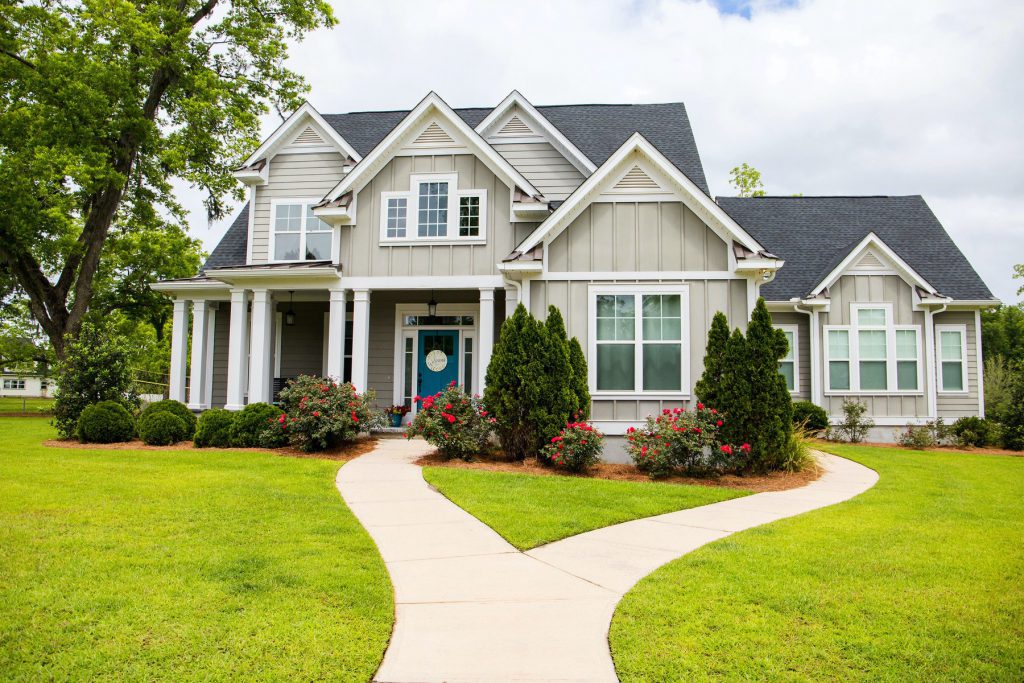
Prep changes with the surface, and most Paso Robles homes are stucco or wood. Good exterior paint prep starts with the material. Stucco with hairline cracks gets an elastomeric coat that bridges the gaps while the wall still breathes. Wood siding gets its bare spots primed, and its gaps caulked, then a flexible acrylic that moves with the sun. Bare metal on railings and flashing gets an anti-rust primer before anything else touches it.
On our jobs that means Sherwin-Williams Pro lines picked for the surface. Stucco gets Loxon, wood siding gets Duration or Resilience, and bare metal gets a direct-to-metal primer. The exact product is written on the quote, so you can see what you are paying for instead of taking it on faith. Matching the coating to the surface is a quiet part of prep that most bids never mention, yet it is the difference between a wall that flexes with the heat and one that splits.
How to Tell if a Painter’s Bid Includes Real Prep
You do not have to watch every hour of the job to know the prep is there. You can read it in the bid before you sign. A quote that spells out washing, scraping, priming, and caulking is describing real labor. A quote that jumps straight to two coats of paint is quietly hoping you will not ask.
Ask those five questions of any bid you collect. The answers sort a careful crew from a fast one quicker than price alone ever will. This is also the honest line between a weekend do-it-yourself patch and hiring a team that preps the whole outside of the home the same way every time.
What Skipping the Right Prep Really Costs
Thin prep saves money on day one and charges you more later. A coating laid over dirt or bare wood can start peeling inside two years, which means paying to paint the same house twice. When water works its way behind the film, the paint lifts, and paint makers’ own repair advice points to trapped moisture and lost adhesion as the usual causes.
The bigger cost sits under the paint. Once the film fails, the siding loses its shield against sun and water, so bare wood can rot, warp, or split. Replacing siding runs far more than painting it on time. Prep is cheap next to that bill, which is the whole reason a careful crew treats it as most of the work rather than the boring part before the fun. A repaint on time protects the wood you already paid for and pushes that replacement cost years down the road.

A Home That Holds Its Color
Picture the other result. The color stays even from the shaded side to the wall that bakes all afternoon. A finish built on real prep can hold ten years or more instead of fading out in two or three. Your home reads as cared for to every neighbor and buyer who drives past, and national surveys of real estate agents rank a clean, well-kept exterior among the first things buyers judge from the street.
That upkeep signal is part of why a sound exterior helps a home show well and hold its value over time. Good prep is quietly doing that work the whole time, long after the crew packs up.